Jimmy KimmelRobert De NiroLate Night TVTV Production
Inside the Chaotic, De Niro-Saved Return of 'Jimmy Kimmel Live!'
After an indefinite FCC-imposed hiatus, the late night show's writers and director reveal how a 30-minute monologue, a last-minute Oscar winner, and a lot of gallows humor brought the show back to 6.2 million viewers.
Source material: indiewire.com
Why did 'Jimmy Kimmel Live!' go on hiatus in September 2025?
The show was pulled from the air for a week in September 2025 after host Jimmy Kimmel faced the wrath of the FCC over a comment he made about the man who killed political commentator Charlie Kirk. According to executive producer Molly McNearney, the indefinite nature of the break was the most difficult part. The team genuinely had no idea if or when they would return, which made the prospect of an unplanned series finale feel very real. McNearney said her initial reaction was upset, because the team had "great plans and ideas" for a proper send-off and wanted to write their own ending. Rather than mismanage expectations, they tried to keep spirits up internally while preparing for the possibility that the show might never come back.
How did the writing team cope with the uncertainty of the hiatus?
The hiatus lasted a week in September 2025, and during the first three days of it the writing staff had no idea if the show would ever come back. Co-head writer Danny Ricker said they coped with gallows humor, describing 'church laughs' — the hardest they have ever laughed — while news helicopters hovered outside the studio. Executive producer Molly McNearney said they tried to keep people’s spirits up without mismanaging expectations, because their return was genuinely uncertain. Ricker credited the supportive and funny group for making the situation less scary; without them, he thinks it would have been far more frightening. The humor became a way to process the surreal pressure of being pulled off the air, and it turned a potentially paralyzing week into a bonding experience.
Who wrote the monologue for the show's return episode?
Jimmy Kimmel himself wrote 95 to 99 percent of the opening monologue for the September 23 return episode, according to Halloway, who usually spearheads the team that works on the segment. The night before the taping, Ricker and a group of writers were eating sushi at Kimmel's house when they asked if he knew what he wanted to say. Kimmel replied that he had "kind of written a thing," and sent it over. Ricker recalled that the draft was about 85 percent of what ultimately aired, prompting a reaction of "You asshole, this is so good." Ricker noted the monologue felt authentic because it was specifically how Kimmel felt, not a product of how 20 writers felt about the situation.
Why was the monologue on the return episode so personal and resonant?
McNearney drew a direct line from the September 23 monologue to two of Kimmel's most personal on-air moments: the one about his newborn having emergency heart surgery and the one about the death of his friend and bandleader Cleto. All three, she said, are examples of how the show's personal storytelling resonates with viewers. The return monologue, however, stood apart because it was almost entirely Kimmel's own work—he wrote 95 to 99 percent of it, per Halloway, and it ran an uncharacteristically long 30 minutes. Ricker credited the authenticity to this singular authorship: it wasn't how 20 people felt, but how Kimmel specifically wanted to address the situation. That personal investment placed the monologue in the same rare category as the heart surgery and Cleto moments, where the host's individual voice overrode the collaborative machinery, creating a raw, unfiltered connection with the audience.
How did Robert De Niro's appearance in the return episode come together?
The bit with Robert De Niro, playing an FCC commissioner, was a last-minute addition that required a massive scramble. Ricker said the field team had less than 30 minutes' notice before De Niro arrived at a New York hotel room where they had set up the set dressing, props, and everything else. The crew filmed the segment over Zoom, but it was edited to look like a real, in-person shoot. Co-head writer Gary Greenberg joked about De Niro's stamina, noting the actor came straight from filming a "Meet the Fockers" sequel to read from the prompter and film the scene. The segment was written quickly by the staff to keep the show's classic format intact, even during such an unusual episode.
What challenges did the director face during the chaotic return episode?
Director Andy Fisher did not know he would be directing Robert De Niro until the day of the return taping. The field team had set up a hotel room in New York with props and set dressing while De Niro was on his way, and Fisher had to coordinate a bit that was being written less than 30 minutes before air. His years on the show, starting as an editor, had taught him to operate in what he calls 'editing in real time' — existing in a reactive space where the script is the goal but something else can always happen. He emphasized that being familiar enough with the material lets him improvise and come back if things go off the rails. Ricker noted that Fisher’s flexibility was key, and the segment, done over Zoom, looked as polished as a studio shoot.
How many viewers tuned in for the return episode?
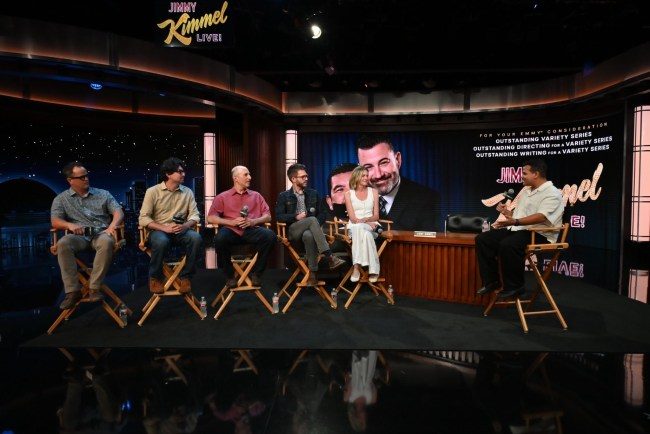
The September 23 return episode drew more than 6.2 million viewers, a figure that stands out because the show was not broadcast in a quarter of the country. That means roughly one in four U.S. television markets had no access to the episode, yet the audience in the remaining markets was substantial. The episode marked the end of a one-week hiatus that stemmed from the FCC controversy over Kimmel's comment about the man who killed Charlie Kirk. The show also received six Emmy nominations for the season, including Outstanding Variety Series, Outstanding Writing for a Variety Series, and Outstanding Directing for a Variety Series. Those nominations recognized the same team that had to produce the comeback under extreme time pressure.
How has audience engagement with the show changed since the hiatus?
McNearney said the way people approach Kimmel has changed. At a coffee shop, fans used to ask 'Where's Guillermo?' or 'Where's Matt Damon?' Now, she said, they come up to him with tears in their eyes and say 'Thank you for trying to save democracy.' She also said the show hasn't changed its approach, but it became overwhelmingly important to continue telling the truth every night and trying to make people laugh. The tears and the thank-yous mark a concrete shift in audience behavior—from casual questions about frequent guests to expressions of gratitude for the show's political stance. This shift is backed by numbers: the return episode pulled in over 6.2 million viewers despite being unavailable in a quarter of the country, showing that the audience's engagement intensified even with limited accessibility. In practice, this means Kimmel now represents a moral stand for many viewers, not just a source of late-night entertainment. The change is a direct consequence of the show's commitment to honesty, as McNearney described it, and it has turned fan interactions from lighthearted queries into emotional acknowledgments of the show's role in the larger civic conversation.