Dance FestivalsBattery DanceWagner ParkPublic Art
Fifty Years of Battery Dance: A Free Festival’s Quiet Radicalism
The 45th Annual Battery Dance Festival turns Wagner Park into a nightly stage of world premieres, cultural collisions, and participatory joy—all for the price of a seat on the grass.
Source material: events.newyorkfamily.com
A Golden Anniversary on the Hudson
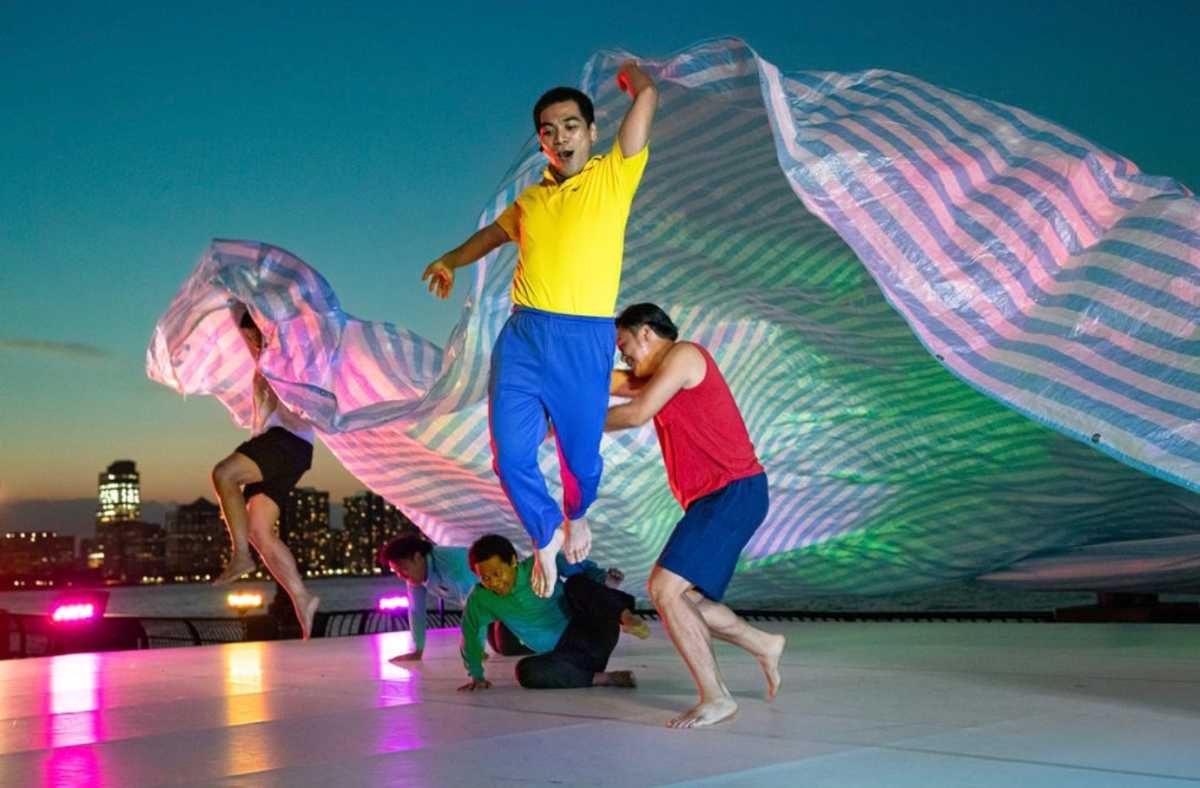
When Battery Dance returns to Wagner Park on August 11, it will mark two milestones at once: the company’s 50th anniversary and the 45th edition of what it calls New York City’s longest-running free public dance festival. Founder and Artistic Director Jonathan Hollander built the event on a simple, stubborn premise—that contemporary dance belongs on a waterfront lawn, not just in a proscenium house. This year the lineup runs six nights, August 11 through 16, with two-hour programs starting at 7pm each evening. The setting does half the work: lower Manhattan’s skyline on one side, the harbor on the other, and the Statue of Liberty visible from the park’s southern edge. The festival’s longevity is its own argument. Most free summer arts series come and go; this one has outlasted administrations, economic downturns, and a pandemic, returning each August with a slate that mixes international debuts with homegrown premieres.
Learning the Steps Before the Curtain
The festival’s first beat is participatory. On Monday, August 10, the day before the main stage opens, Wagner Park hosts four 45-minute community workshops at 4:00, 5:00, 6:00, and 7:00pm. Each session is led by a local dance group appearing in the main festival, and each introduces a distinct style—from Afro-Caribbean percussive traditions to contemporary partnering work. The sessions are pitched at beginners, with no experience required, and the emphasis is on shared movement rather than polished technique. It is a deliberately low-stakes doorway into the festival: participants learn a short phrase, hear the cultural context behind it, and then watch that same company perform in the evening. For the companies, the workshops double as a warm-up and a chance to build an audience for their specific idiom before they take the stage.
World Premieres and US Debuts Across the Week
The mainstage programming is dense with firsts. Opening night, Tuesday August 11, includes two world premieres from Battery Dance itself—one a new commissioned work, the other a piece titled then by Rosalind Newman—alongside the US premiere of Lucas Mendes’ Voices that Echo Within Us, performed by Brazil’s Movimento em Foco. Wednesday brings a fresh commission from Jock Soto, the former New York City Ballet principal, and the US debut of Spain’s Cía Elías Aguirre performing Flowerheads. Thursday pairs a 2024 excerpt from CRDANCE’s Alta Marea with the US premiere of Taiwan’s Mailantia Dance Company in Mutual. Friday’s slate includes Robenson Mathurin’s Legacy in Rhythm, a New York premiere, and Ecuadorian company Allpayana’s Otavalo Wedding. The range is deliberate: a single week moves from Spanish contemporary to Taiwan’s experimental movement language to classical Indian forms, with no single aesthetic dominating.
An Evening Devoted to Indian Classical Dance
Saturday, August 15, breaks from the week’s international mix to focus on one tradition: the classical dance heritage of India. The evening aligns with Indian Independence Day, and the programming leans into the formal vocabularies of Bharatanatyam, Kathak, and Odissi—each performance a display of precise footwork, mudra storytelling, and rhythmic improvisation. It is the festival’s longest-running thematic night, and it draws a crowd that often travels from across the tri-state area. The choice to dedicate a full evening to one national tradition, in a week otherwise devoted to stylistic pluralism, speaks to the festival’s curatorial logic: it treats classical Indian dance not as a niche interest but as a mainstream theatrical form deserving a prime summer slot. The night is presented in partnership with the Battery Park City Authority.
Closing Night’s Blend of Memory and Invention
The final performance on Sunday, August 16, is the most stylistically varied of the week. It opens with Maxine Steinman & Dancers’ A Measure of Quarantine, a 2024 work that refracts pandemic isolation through movement. Melanie Futorian offers Half a Century: Between Us, a world premiere that marks the company’s 50-year arc. The program then turns to a trio of recent works—Julia Weber’s Ballade from 2025, Thomas/Ortiz Dance’s Disclaimer also from 2025, and Nat Wilson’s Someone Has to Leave First, created with Grace Whitworth in 2025—before Jon Lehrer Dance Company resurrects Murmur, a piece from 2012. Battery Dance closes the night with a newly commissioned world premiere. The mix of recent and older repertory is a reminder that the festival has never operated purely as a showcase for the new; it also serves as a living archive of the past half-century’s choreographic concerns.
America 250 and the Festival’s Civic Frame
Before the main festival week begins, Battery Dance stages a special one-night performance on Saturday, July 25, 2026. Titled America 250: Moving Together, it commemorates the U.S. semi-quincentennial with the Statue of Liberty as a literal backdrop. The program is designed to acknowledge the indigenous peoples who stewarded the land long before the founding of the United States, and to use dance as a way of examining competing narratives of American identity. The date—set apart from the August festival—gives the work its own platform. The festival as a whole ends up bracketing two national conversations: one about the country’s founding story, the other about the continuous arrival of new movement traditions. In that juxtaposition lies the series’ quiet radicalism—it treats immigration, history, and artistic innovation as inseparable.