Ancient DNABeringiaNative American OriginsAlaska Archaeology
Alaskan Infant Genomes Reveal a New Native American Lineage—and a Split Over How the Americas Were Peopled
The 11,500-year-old remains suggest a previously unknown maternal line and support separate crossings of the land bridge, yet some geneticists caution against drawing too much from a single pair of genomes.
Source material: informedfinder.com
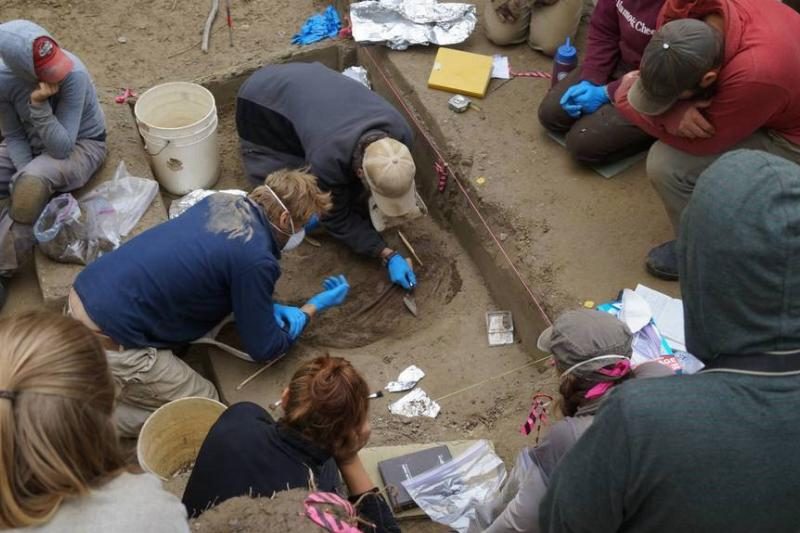
Two Infant Girls, Buried in Red Ochre, Emerge from an Alaskan Fire Pit
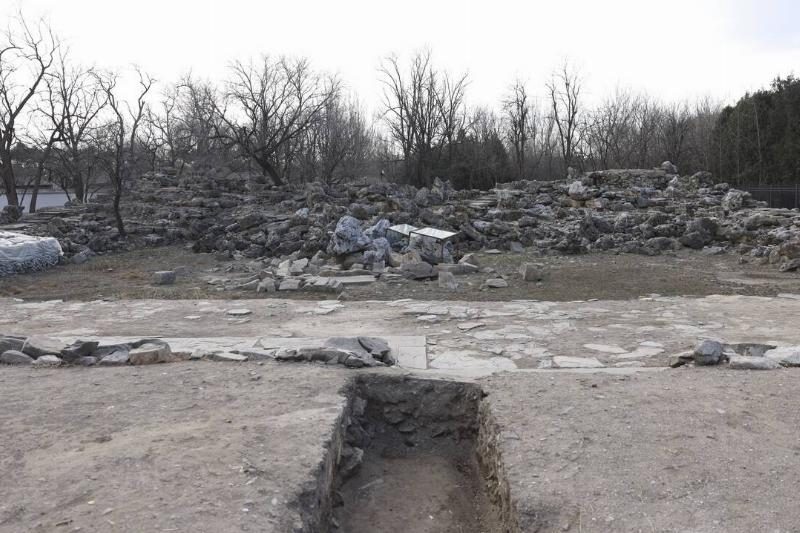
In 2018, archaeologists led by Ben Potter of the University of Alaska excavated a burial pit at Upward Sun River, a helicopter-only site 50 miles from Fairbanks. Inside they found the skeletons of two infant girls, both dated to 11,500 years ago. One had been stillborn at 30 weeks; the other was between six and 12 weeks old. The pair lay on a fire pit beneath a layer of red ochre and a high-acidity sand-soil mixture that preserved their bones. Grave goods included antler and spear points. The local Athabascan community named them Xach'itee'aanenh T'eede Gaay (Sunrise Girl-Child) and Yełkaanenh T'eede Gaay (Dawn Twilight Girl-Child). The two were buried in a joint funeral, and the older infant, Sunrise Girl, was the better-preserved of the two. Both had been cremated, yet the soil chemistry retained enough cellular material for later DNA analysis.
A 2010 Find That Couldn't Give Up Its DNA
Eight years before the infant burial, in 2010, the same team at Upward Sun River found the cremated remains of a three-year-old child. Despite being equally ancient, that skeleton was too damaged to yield any DNA — even the child's gender remained unknown. The key to ancient DNA is the petrous bone at the base of the skull, but it was too fragmented. That setback didn't stop Potter and his colleagues, including José Víctor Moreno Mayar and Lasse Vinner, from continuing to excavate for another eight years. The petrous bone is often the only source of usable DNA in ancient remains, and its loss meant the team had to work without genetic information from that individual. Their persistence paid off with the 2018 discovery, which would later provide the first ancient DNA from this pivotal period.
The Beringian Standstill Hypothesis Finally Gets a Test
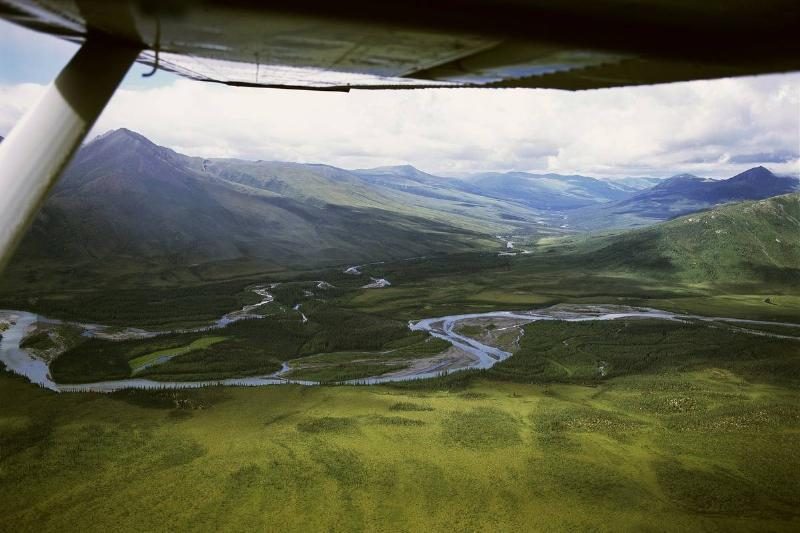
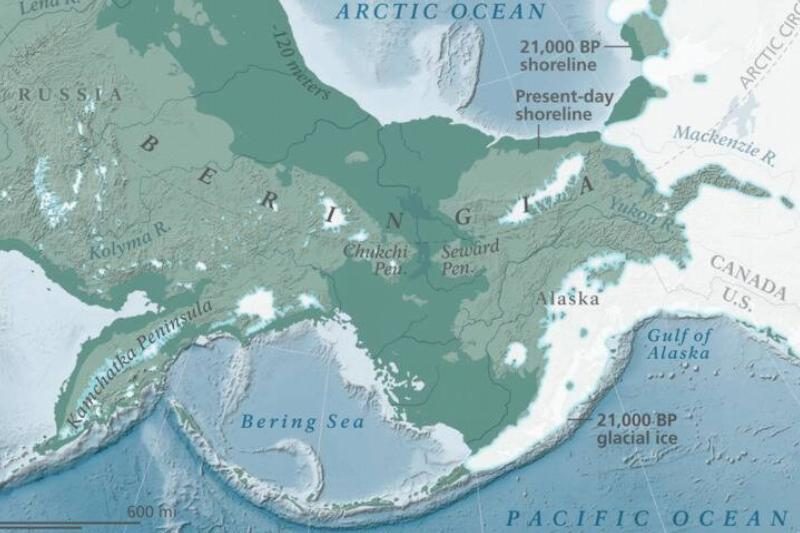
For decades, archaeologists debated the Beringian standstill hypothesis, which proposed that the first Americans lingered on Beringia—the land bridge connecting Siberia and Alaska—isolated by glacial ice and a harsh climate before eventually moving south. Jennifer Raff, an archaeologist, suggested that if this scenario held, the Ancient Beringians would be the sole ancestors of all Native Americans. The hypothesis needed a concrete test: if the standstill had occurred, early Native Americans should share a single founding population. The 2018 discovery of two infant skeletons at Upward Sun River in Alaska provided the first direct genetic evidence. Their DNA, extracted from well-preserved petrous bones, did not show a single lineage. Instead, the infants belonged to different maternal groups, implying that the standstill involved multiple populations that had diverged before crossing the bridge. This complexity suggests the standstill was not a uniform isolation but a period of internal differentiation, with groups eventually reuniting—or perhaps never completely separating—before spreading across the Americas. The finding reframed how researchers think about the timing and structure of early human migration into the New World, turning a theoretical bottleneck into a dynamic, multi-branched story.
One Infant's DNA Revealed a Brand-New Native American Lineage
The first round of DNA testing, performed at the University of Alaska, focused on Sunrise Girl, the six-week-old infant from the Upward Sun River burial. Her mitochondrial DNA—extracted from a well-preserved skull base—was unlike any previously sampled Native American lineage. Researchers named this novel genetic signature USR1, and it dates back at least 20,000 years, with a possible origin as far back as 34,000 years ago. Eske Willerslev, a professor at the University of Copenhagen and co-author of the study published in the scientific journal Nature, told CNN Health that these remains represent 'the oldest known Native Americans to date.' This discovery provided the first direct confirmation that a previously unknown population—the Ancient Beringians—had actually existed, moving the Beringian standstill hypothesis from speculation to evidence. More importantly, it shifted the timeline for when Native American genetics split apart. The divergence had to have occurred much earlier than many researchers had assumed, potentially during the standstill itself. Willerslev explained that the finding changes our understanding of the timing of events that formed the genetics of Native Americans. The age of USR1, combined with its distinctiveness, indicated that the split among Native American ancestors happened at least 20,000 years ago, when glacial ice still blocked many routes south.
Two Cousins, Two Different Maternal Lineages
When geneticists examined the second infant, Dawn Twilight Girl, at the University of Copenhagen, they expected to find a maternal lineage similar to Sunrise Girl's, given that the two girls were likely first cousins. Instead, they discovered an entirely different lineage, one more closely related to the Northern Native American branch. This meant the two infants' mothers belonged to distinct genetic groups, despite the girls' close familial connection. The finding led researchers to conclude that the Ancient Beringians had already split into at least two, possibly three, separate branches by the time these infants were born. Demographic modeling estimated that the ancestors of Native Americans left East Asia around 36,000 years ago, and that this group had split into distinct lineages by about 20,000 years ago. Yet the joint burial of the two girls, placed together in a fire pit and covered with red ochre, suggested that these divergent branches had met again at least once. The mourners who laid the infants to rest clearly shared a funeral practice, indicating that the groups maintained contact despite their genetic separation. This raises the possibility that the split was not absolute, and that different Ancient Beringian groups reunited, perhaps through marriage or trade, before or after crossing the land bridge.
Potter's Theory: Separate Crossings of the Bering Land Bridge
Ben Potter, the lead archaeologist at Upward Sun River, proposed a specific explanation for how two related infants with different maternal lineages ended up in the same grave. He suggested that the two branches of Ancient Beringians crossed the Bering land bridge independently, possibly at different times and along different routes. That would account for their genetic divergence and their later reunion, which was marked by the shared burial. While this might seem far-fetched, Potter argued that the burial context supports it: the two groups were close enough to lay their children to rest together, implying a recognized kinship despite their separate histories. He favored this model over the alternative that the groups split after crossing, because the genetic distance between the lineages suggested a longer period of separation than a post-crossing split would allow. His interpretation implies that the colonisation of the Americas was not a single, linear event but a staggered process, with multiple groups arriving over thousands of years. This view aligns with the possibility that various populations crossed the land bridge at different times, adapted to the challenging environment, and then interacted once they were in the same region. The infants' burial serves as a tangible snapshot of that complex, non-uniform migration.
Bluefish Caves: 24,000-Year-Old Evidence of Early Humans
Independent support for Potter's reading comes from the Bluefish Caves in Canada's Yukon Territory. Animal bones bearing cut marks from human tools, dated to 24,000 years ago, were uncovered there. If accurate, that places humans in Beringia thousands of years before the Upward Sun River infants were born. Jennifer Raff, who supports this interpretation, says it complicates any simple story of a single migration. The dating also suggests that multiple groups may have moved across the land bridge over time. The cave evidence does not directly prove that the Ancient Beringians split and reunited, but it keeps open the possibility that human entry into the Americas was not a singular event. The cut marks themselves—deliberate incisions on bone surfaces—indicate that early humans were actively processing animals, likely for food and tools. This activity predates the Upward Sun River site, showing that people had adapted to the harsh northern environment much earlier. While the Bluefish Caves findings have their own debates, they provide a chronological backdrop that fits with the idea of a staggered, multi-wave colonisation. The caves sit in the same broader region as the later burial site, suggesting a continuity of human presence across millennia.
Why Some Geneticists Are Skeptical of a Single Genome
Not everyone is convinced the two infants represent the whole picture. Dennis O'Rourke, a geneticist and archaeologist, told Smithsonian Magazine that a single sample isn't enough to draw broad conclusions about an entire population. 'We could know something about the extent of diversity in this early Beringian population with greater certainty if we had multiple genomes,' he said. Brian T. Wygal, an archaeologist, points out that the earliest proven trace of human activity in eastern Beringia dates to around 14.1 thousand years ago, making the Upward Sun River site nearly 3,000 years too young to be representative of the initial human colonisation of the New World. Both critics acknowledge the value of the discovery—the infants' DNA is exceptionally rare and well-preserved—but they caution against overgeneralizing from a single burial. The lack of additional genomes means researchers cannot determine whether the two infants' lineages were typical of the broader Ancient Beringian population or unique to their family group. Without more samples, questions about the full extent of genetic diversity, the timing of splits, and the eventual fate of these early populations remain unresolved. This burial ground, while remarkable, may only offer a narrow window into a much larger and more complex story.
The Beringians May Have Been Absorbed into Modern Athabaskans
What happened to the Ancient Beringians after they mixed with other groups? Ben Potter has suggested that they may have been absorbed by incoming Athabaskan ancestors, who are now widespread across Alaska. He plans to take DNA samples from modern Athabaskan residents to see if the Beringian gene still exists. 'It is possible that incoming Athabaskan ancestors, who are widespread throughout the region today, replaced or absorbed the Ancient Beringians inhabiting that area,' Potter said. If that is true, many contemporary Native Alaskans could carry Beringian ancestry without knowing it. The fate of the Beringians remains an open question, but the prospect of finding their genetic legacy in living populations gives researchers a new lead. Because scientists now know what Beringian DNA looks like—thanks to the USR1 lineage—they can test modern populations for traces of it. If Potter's hypothesis holds, the Ancient Beringians did not disappear entirely; they merged with later migrants, leaving their genetic signature in the Athabaskan gene pool. This would also explain why this excavation location, which lies within Athabaskan territory, holds deep significance for the local Native community. Their oral history and cooperation with the excavation may reflect a long, unbroken connection to the region's earliest inhabitants. The ongoing analysis of contemporary DNA could finally reveal the Beringians' ultimate legacy.
What the Beringians Ate: Bison, Elk, and 6,000-Year-Old Salmon
The excavation at Upward Sun River also offered a glimpse into the Beringian diet. Ben Potter found evidence that they hunted bison, elk, rabbits, squirrels, and birds, often in organised hunting parties. At the same site, he also found traces of salmon exploitation dating back 6,000 years, suggesting that these people fished and traded as well. These dietary clues paint a picture of skilled foragers who adapted to a cold environment. The presence of salmon so early challenges the idea that Beringians were strictly big-game hunters. Instead, they had a varied menu that supported their survival through the harsh Alaskan climate. The salmon remains, in particular, indicate a sophisticated understanding of seasonal resources—running fish would have been a reliable food source during warmer months, while hunting provided meat throughout the year. The organisation of hunting parties suggests social coordination, likely involving multiple families or bands working together to bring down large prey. This level of planning and resource use implies a culture with established traditions and knowledge passed down through generations. The infants were buried with antler and spear points, and the grave also contained other items such as those. Together, these findings describe a people who were not simple wanderers but settled, adaptable communities that thrived in one of the most challenging environments on Earth.