Disney MoviesMovie EndingsAnimated FilmsClassic Cinema
8 Disney Movie Endings That Are Masterclasses in Closure
These eight Disney finales land their last beats with everything from a lawnmower trip to a Kraken attack.
Source material: collider.com
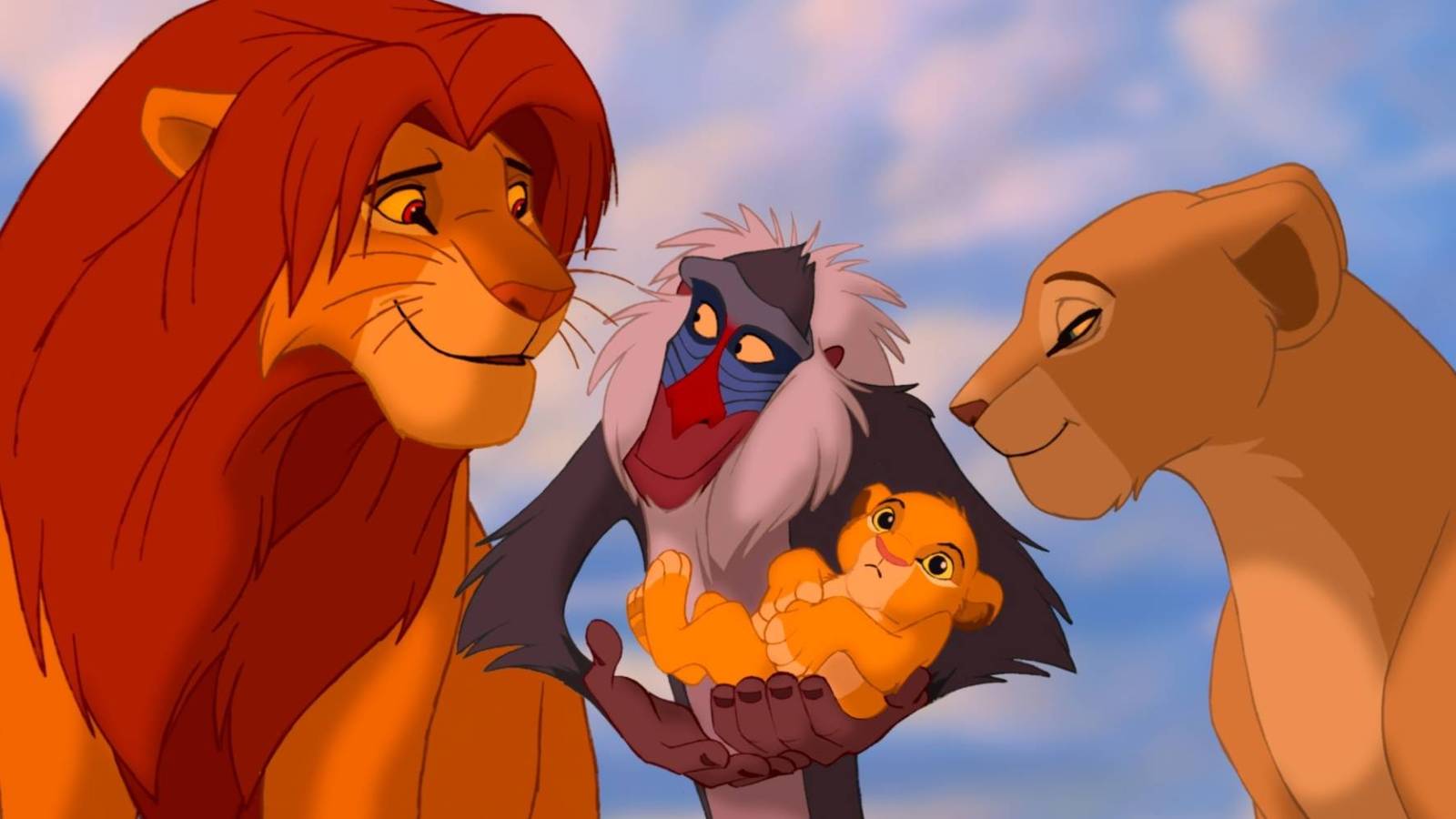
The Lion King (1994)
Simba (Matthew Broderick) reaches Pride Rock not with a roar but with a quiet claim. After Scar (Jeremy Irons) falls to the hyenas—the movie leaves his body to the flames—Simba takes the kingship that was always his. Nala (Moira Kelly) stands beside him, and when he presents a newborn cub to the gathered animals, the reprise of "The Circle of Life" turns the shot into a mirror of the film's opening sunrise. The symmetry closes a story patterned on Shakespeare's Hamlet and West African folklore, yet it needs no literary footnotes. The studio had penciled in Pocahontas as its prestige play for 1994; this is the one that became the modern classic. What makes the ending a masterpiece is its restraint: no villain speech, no last-second reversal, just a restored order and a lineage continued. The visual rhyme alone carries the catharsis.
The Straight Story (1999)
David Lynch, the master of the unsettling, made exactly one G-rated movie in 1999, and its ending is the least dreamlike thing he ever shot. Alvin Straight (Richard Farnsworth) has spent the film trundling across Iowa and into Wisconsin on a riding lawnmower, a real-life retired farmer who set off to see his estranged brother. When he finally arrives, Lyle (Harry Dean Stanton) does not deliver a speech. The two men sit on the porch and look at the stars, and the shared silence says everything. The film's title is a promise, and the ending keeps it: there is no twist, no recontextualization, only the earned quiet of two old men who have run out of grudges. Richard Farnsworth and Harry Dean Stanton's performances make the moment feel lived rather than acted. It is the most artful and emotionally stirring conclusion in Disney's live-action catalog, precisely because it dares to do nothing.
Pirates of the Caribbean: Dead Man's Chest (2006)
The 2006 sequel ends with the entire crew at rock bottom, and that is why it lands. Jack Sparrow (Johnny Depp) is dragged beneath the waves by the Kraken, seemingly dead. Lord Cutler Beckett (Tom Hollander) now holds Davy Jones' (Bill Nighy) beating heart, giving the East India Trading Company a stranglehold on the seas. The Black Pearl's survivors—Elizabeth, Will, and the rest—have no ship, no captain, and no plan, so they do the only logical thing: they dig up the resurrected Barbossa (Geoffrey Rush) and ask him for help. It is a cliffhanger that works because every character arc has been pushed into a corner. Critics initially balked at the two-and-a-half-hour running time, but audiences pushed it past $1 billion at the worldwide box office. The ending's promise of a rescue mission is the kind of franchise-building that modern blockbusters still try to copy, and it remains Hollywood's last true swashbuckling epic.
Lilo & Stitch (2002)
Most alien invasion movies end with the extraterrestrial either defeated or integrated into a government agency. Lilo & Stitch (2002) chooses neither. After the Grand Councilwoman (Zoe Caldwell) sees how deeply Lilo (Daveigh Chase) and Stitch (Chris Sanders) have bonded, she stops the capture order and lets Experiment 626 remain on Earth. The final scenes show the newly formed family—Lilo, Stitch, and the people who now accept him—settling into a life that is still messy but unmistakably theirs. Stitch is still a destructive troublemaker; he just has a place where that chaos is accepted. The theme of family is carried not by a speech but by the image of a blue alien who has found a home. It is a soaring, tearful conclusion that manages to be both thrilling and tender, and it proves that the best endings don't wrap things up—they open a door.
Tangled (2010)
Tangled's finale is a masterclass in tonal contrast. The final confrontation with Mother Gothel (Donna Murphy) is surprisingly dark, and it takes all of Eugene's (Zachary Levi) cleverness—and a very close call—to free Rapunzel (Mandy Moore) from the manipulative grip that kept her hidden. The escape leads to a sun-drenched return to the kingdom, where the King and Queen finally hold their daughter, and the screen fills with vibrant color. Eugene narrates the conclusion with a wry warmth that keeps the romance from cloying. He and Rapunzel marry, and the storybook framing lets the audience exhale. What makes the ending impressive is how it earns the bright, colorful coda after so much heartbreak. The villain is gone, the princess chooses her own happiness, and the film closes as one of Disney's sweetest, funniest, and most creative romantic comedies. It is a proof that princess movies still had life in the 2010s.
Beauty and the Beast (1991)
Beauty and the Beast (1991) made history as the first animated film nominated for the Best Picture Oscar, and its ending is a large reason why. After Beast (Robby Benson) defeats Gaston (Richard White) in a fight that feels physical in a way that still startles, Belle (Paige O'Hara) arrives in time to confess her love. The spell breaks, and the castle's inhabitants turn back into humans, leaving behind the teapots and candlesticks that had become so beloved. The ending resolves Beast's redemption arc without shying from the cost: he has to be wounded, Gaston has to fall, and the curse has to be broken by a choice. It is sweet but never saccharine, and the theme of inner beauty lands because the Beast's transformation is matched by Belle's perspective. The final moments give every character a share of the joy, from the reunited household to the newly human servants. It is the purest "happily ever after" the House of Mouse has ever engineered.
The Muppets Christmas Carol (1992)
The 1992 Muppets Christmas Carol ends the way Dickens intended: Scrooge (Michael Caine) wakes up a new man on Christmas morning and makes his way to Bob Cratchit's (Steve Whitmire) family celebration. But what turns the scene into a masterpiece is the way Michael Caine treats his Muppet co-stars as real people all the way through—so when he stands at their table, smiling with genuine tenderness, the moment carries weight. The film adds a beautiful musical number, and the assembled cast—human, frog, pig, whatever—sings its way into the final frame. It is one of the funniest Christmas movies ever made, but the ending is not played for laughs. The gags step aside for a sincere embrace of Dickens' message of generosity and second chances. The combination of absurd puppetry and real emotional stakes is rare, and this ending proves the Muppets are at their best when they turn a classic into something warmer than the original.
Fantasia (1940)
The 1940 film Fantasia doesn't have a plot, so its ending has to be a tonal statement, and it's a stunning one. The film's final act pairs Modest Mussorgsky's "Night on Bald Mountain" with towering, menacing shadows, and just as the darkness feels overwhelming, the music shifts into Franz Schubert's "Ave Maria." The animation follows, moving from stark silhouettes and heavy colors to bright, hopeful imagery of light breaking through. The transition from night to day, from chaos to calm, is simple but visually grand. It works as a coda to an anthology that has spent two hours celebrating musical variety: after all the dancing, the centaurs, and the dinosaurs, the film ends with a spiritual hush. That hopefulness is the real conclusion. It may be the most ambitious movie Disney ever made, and this ending—two contrasting pieces of classical music stitched together into a single visual aria—is a stunning example of animation making music visible.