Air Travel EtiquettePassenger BehaviorFlight ComfortAirline Disruptions
10 People Who Shouldn’t Be Allowed on Planes
A ranked warning list for anyone who’s ever shared a metal tube with a stranger’s elbows, speakerphone, or bare feet.
Source material: thetravelbible.com
The Recline-and-Dine Menace
Reclining is allowed—that’s the problem. The Recline-and-Dine Menace never glances back, never warns, and never offers a gentle movement. They simply slam the seat backward at full speed, with no warning system at all. The person behind them might be holding a cup of hot coffee, opening a laptop, or trying to eat pasta from a tray the size of a playing card. One sudden impact and that coffee is gone, that laptop is a mess, and that pasta is decorating the floor. Their seat flies back like a drawbridge collapsing in a storm, leaving the passenger behind to deal with the wreckage. The fix is simple: recline slowly and look behind you. Give the person a second to move their drink or close their screen. The recline itself is not the issue; the sudden impact with zero warning is. Passengers behind you have hot liquids, open screens, and food balanced on a tray the size of a playing card. A fast recline turns a peaceful lunch into a spill. All it takes is a moment of consideration. Be a person.
The Armrest Dictator
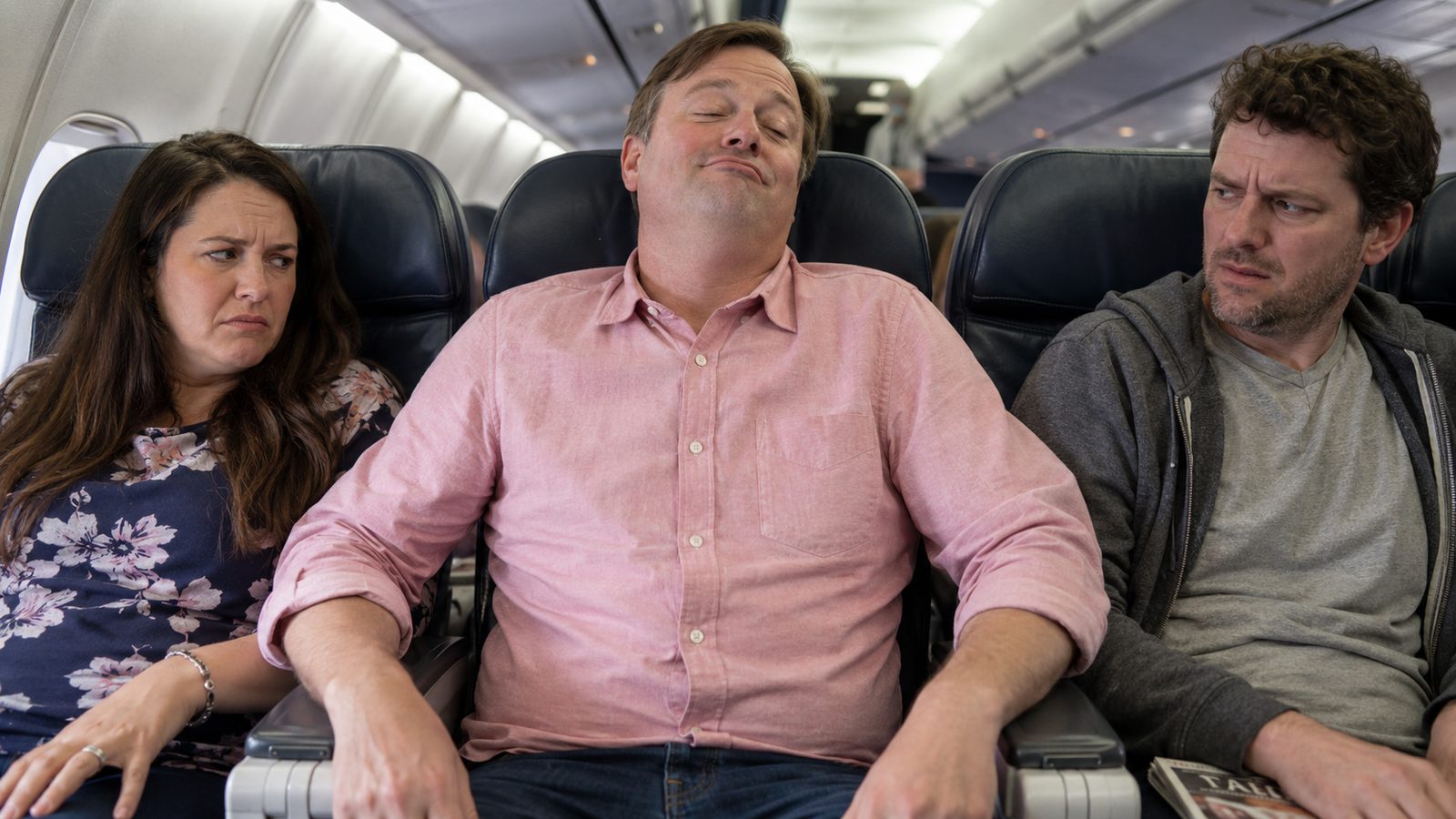
There’s an unspoken law of flying: the person in the middle seat gets both armrests. They have no window, no aisle, and are trapped between two strangers like a human sandwich filling. The least society can do is grant them a narrow strip of plastic on either side. But the Armrest Dictator does not care. They spread their elbows like defending territory in a medieval siege. They sigh when nudged, glare when challenged, and behave as though boarding came with a deed to row 24. Ban them until they complete a short course called Basic Shared Space for Adults. The course would cover the simple maths: one middle seat, two armrests, no negotiation. Respect the sandwich. The Dictator's tactic is pure spatial intimidation: claiming both armrests as a preemptive strike, and the sighing and glaring serve to discourage any objection. They treat the armrests as a birthright, not a courtesy.
The Overhead Locker Hoarder
This passenger boards with a carry-on suitcase, a giant backpack, a shopping bag, a coat, a neck pillow, a duty-free sack, and possibly a small household appliance. They shove everything into the overhead locker and sit down smugly, leaving everyone else to play luggage Tetris. The worst offender stows their bag in row 5 while sitting in row 28, causing chaos at deplaning. Overhead space is shared space—one bag up top, small item under the seat. That’s the social contract. Violators should have their luggage checked directly to “somewhere inconvenient.” The airline industry already knows bag sizes; a simple limit of one overhead item per passenger could end this. But until then, the hoarder’s victims are left to squash their jackets into gaps.
The Speakerphone Celebrity
The plane lands, and before the wheels have even stopped rolling, someone is on speakerphone shouting, “YEAH, I JUST LANDED.” We know—we were there. The Speakerphone Celebrity believes every conversation deserves an audience. They play videos without headphones, take calls at full volume, and watch reality TV in the boarding queue like they’re hosting a public screening. Headphones aren’t a luxury; they’re civilisation. A set of earbuds costs less than a checked bag, yet this passenger never seems to own one. On a recent flight, a passenger in row 12 FaceTimed their entire family without a break while others tried to nap. The crew didn’t intervene. The rule is simple: if you’re sharing your audio with the whole cabin, you’re not being social—you’re being a soundtrack to someone else’s misery.
The Barefoot Wanderer
Shoes off at your seat is questionable but sometimes understandable on a long-haul flight. Socks off? Absolutely not. Walking to the bathroom barefoot? Straight to the no-fly list. The aircraft floor has seen coffee spills, food crumbs, mystery liquids, and tiny bathroom disasters. It is not a spa, a beach, or your bedroom. The wanderer pads down the aisle as if the floor were a personal moss garden, oblivious to the biofilm of a thousand departures. Airlines might issue paper slippers, but passengers would prefer you just keep your footwear on. The problem isn’t just hygiene—it’s the psychological shudder when you see bare toes on a plane floor that’s been host to every kind of wrong. One passenger once saw a child throw up near the lavatory; the wanderer stepped right through it.
The Passenger Who Needs Two Seats But Books One
Airline seats are horribly small, and much blame belongs to carriers squeezing rows built for garden gnomes. But there’s an unavoidable truth: if you know you can’t fit into one seat, booking only one and spilling into someone else’s space isn’t fair. Nobody should have to spend a flight pressed against the window, half-twisted into the aisle, or surrendering part of a seat they paid for because the person beside them needed more room but didn’t plan for it. If a passenger needs two seats, they should book two seats. Airlines should make that process cheaper, clearer, and less humiliating—but the answer can’t be quietly making a stranger lose half their seat for six hours. A seat is bought; an armrest can be shared, but a torso is not negotiable.
The Aisle Blocker
When the plane lands, this passenger leaps up immediately, grabs their bag, blocks the aisle, and then stands there for ten minutes while the door is still closed. Where are they going? Nowhere. Are they helping? No. Are they preventing everyone else from moving? Absolutely. The Aisle Blocker also appears during boarding, carefully arranging belongings while 87 people wait behind them. They remove snacks, headphones, books, chargers, jumpers, and emotional baggage before finally sitting down. The solution is simple: step into your row, let people pass, organise your life later. The ten minutes of standstill at the gate feels like an eternity to everyone clutching a connection. One airline gate agent recently asked passengers to remain seated until the door opened—the Blocker didn’t listen.
The Drunk Chaos Agent
A drink at the airport is part of the holiday ritual. A celebratory glass of wine on board? Fine. But the Drunk Chaos Agent takes it further. They board loud, get louder, flirt with strangers, argue with crew, spill things, ignore seatbelt signs, and treat turbulence like audience participation. They’re the reason some flights feel less like transport and more like a badly supervised stag do. The crew has to manage a flying pub incident over international waters, where there’s no police on speed dial. A study by the International Air Transport Association found that alcohol-related incidents accounted for a significant share of disruptive passenger reports—though the specifics vary by airline. Being drunk on a plane isn’t charming; it’s stressful for everyone, and the crew ends up as bouncers at 38,000 feet.
The Entitled Upgrade Beggar
This passenger booked economy but believes destiny intended them for business class. They ask at check-in, ask at the gate, ask the flight attendant. They mention birthdays, anniversaries, honeymoons, bad backs, good vibes, and the fact that they “travel a lot.” Everyone would like an upgrade—that’s why it’s called an upgrade. The Entitled Upgrade Beggar should be seated next to the toilets until they learn that asking six times does not make a miracle more likely. A gate agent recently told a beggar that the upgrade list had many names ahead, yet the begging continued. The seats are already assigned; the manifest is set. What beggars don’t realise is that frequent flyers often get priority not because they ask but because they earned it. Asking repeatedly just earns a reputation.